


- Graphite Slides Rails and Sliding Parts
- Graphite Rails for Monforts Stenter M/C (Without Cover)
- Graphite Slide Rails Monforts Stenter M/C (With Cover)
- Graphite Rail for Krantz Stenter M/C
- Graphite Slide Rails Famatex Stenter M/C
- Graphite Lugs, Half Round Bearing & Lock Pins For Famatex Stenter M/C
- Synthetic Bushes for Bancock & Monforts M/C
- Sliding Part Sanitex Machine
- Sliding Part Textima M/C
- Sliding Part Babcock Machine
- Graphite Blocks and Seals


The Importance of Heat Resistance in Brush Holder Design

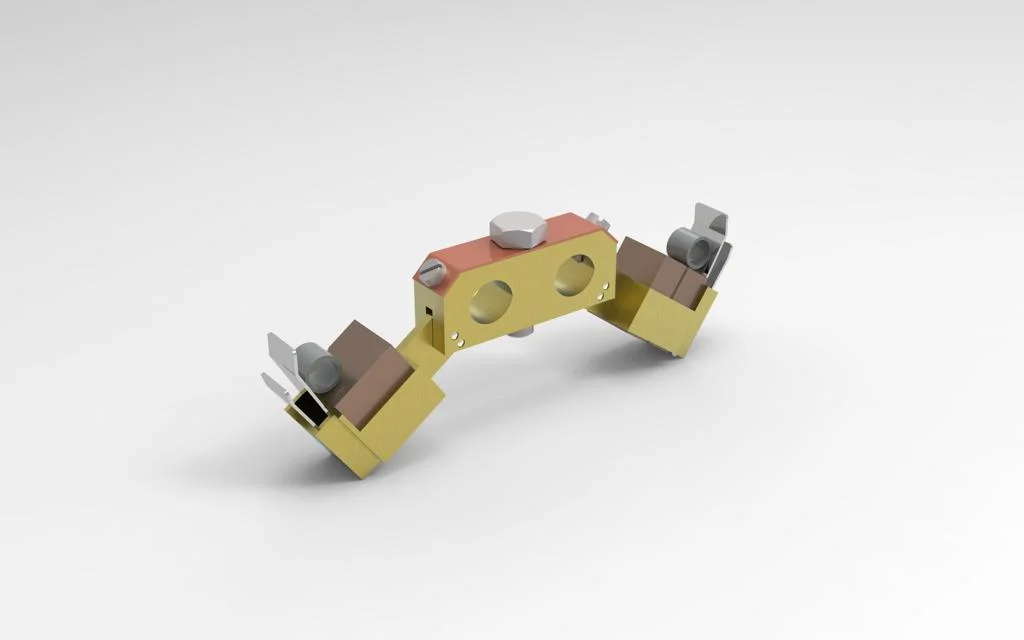
In any factory, the efficiency of the process depends on how well the equipment functions. Whenever we design industrial equipment, we must understand the kind of operational conditions these components are subjected to. In rotating machines, for example, every component works under heavy mechanical stress. The other concern is heat. Most industrial processes generate a lot of heat that can damage the equipment.
In rotating electrical machines, brush holders play a critical part. This is the component that ensures that there’s a stable connection between carbon brushes and the commutator or slip ring. But this part is often exposed to a lot of heat. Carbon brush holder manufacturers in India, thus, always focus on heat resistance when they design these components. So, without further ado, let’s talk about how heat can damage brush holders and why heat resistance is given so much importance in industrial settings!
Understanding Heat Generation in Electrical Machines
In any electrical machine, the components face electrical resistance and mechanical friction. This is true for all systems, including electrical motors, generators, traction systems, and every other electrical equipment. These systems generate a lot of heat that comes from:
- Electrical current flowing through brushes and contacts
- Friction between the brush and the commutator
- Load variations and voltage fluctuations
- Ambient operating temperatures
For all of these electrical machines, brush holders are an extremely crucial component. If the brush holder can’t handle heat effectively, that can compromise your entire operations.
Why Brush Holders Must Handle High Temperatures
Brush holders help electrical equipment in three major ways:
- Holding carbon brushes in precise alignment
- Applying consistent pressure
- Maintaining electrical stability
Naturally, these components are exposed to a lot of heat most of the time. Under such operating conditions, poorly designed holders can:
- Lose mechanical strength
- Warp or deform
- Lose spring tension
- Crack or fatigue
- Disrupt brush contact
For electrical devices, such disruptions can cause serious issues. It can lead to sparking or overheating. In the long run, such problems can cause excessive wear and even equipment shutdown.
Impact of Heat on Brush Performance
In any electrical system, the carbon brushes must be aligned properly so that they have a stable connection. It allows the current to be transferred smoothly. If the brush holder is somehow damaged because of high temperatures:
- Brush pressure becomes inconsistent
- Contact resistance increases
- Electrical arcing becomes more likely
- Brush wear accelerates
This naturally brings down the efficiency of your system, but it does more harm than that. It also means that you have to schedule frequent maintenance cycles. This always adds to your operational budget.
Material Selection & Thermal Stability
In carbon brush holder design, the material you use plays an important part. Manufacturers often choose heat-resistant materials because it adds an extra layer of stability. Properties of such heat resistant materials include:
- High melting point
- Low thermal expansion
- Resistance to oxidation
- Structural stability under heat
Manufacturers also avoid materials that expand too much under heat. Such materials can change the alignment of the brushes. It leads to uneven contact and it can also cause rapid wear.
Preventing Thermal Deformation
Carbon brush holders must keep their shape if the electrical equipment is to run properly. If the holder changes shape due to heat:
- Brushes may tilt or bind
- Spring pressure may become uneven
- Contact surfaces may misalign
Manufacturers have to make sure that the brush holder retains its original shape, failing which your operations can be disrupted. Under continuous thermal load, such poorly designed equipment can fail, leading to catastrophic outcomes.
Protecting Spring Tension
Every brush holder comes with a number of springs that push the carbon brushes against the commutator. If the component can’t handle heat, it can weaken these springs:
- Brushes lose proper contact
- Sparking increases
- Electrical resistance rises
- Heat generation becomes worse
Heat resistance in brush holders thus becomes more crucial as it prevents the entire system from collapsing.
Extending Maintenance Intervals
If the brush holder can handle heat, the entire electrical system works more efficiently. This leads to:
- More even brush wear
- Less frequent replacement
- Fewer unplanned inspections
- Lower labour and spare part costs
If your brush holder is heat resistant, you won’t need to arrange frequent maintenance cycles. It helps in two ways: first, it saves your money, and second, it reduces downtime.
Final Thoughts
Heat is an unavoidable part of electrical machine operation, but failure due to heat does not have to be. By prioritising heat resistance in brush holder design, manufacturers ensure that one of the most critical components in the system can survive and perform under real-world conditions. Strong heat-resistant brush holders protect electrical stability, reduce wear, improve safety, and extend equipment life. In demanding industrial environments, that reliability makes all the difference.
